
Ground Improvement & Stabilization Modern Techniques for Strong Foundations
Ground improvement and soil stabilization are geotechnical engineering processes designed to enhance the engineering properties of weak or unstable soil. While often used interchangeably, ground improvement typically refers to physically altering the soil's state (density, moisture), whereas soil stabilization often involves adding chemical binders to create a permanent change in the soil's mineral structure.
1. Common Ground Improvement Techniques:
These methods physically modify the ground without necessarily adding permanent chemical binders.
Compaction Methods:
Vibro-Compaction: Uses powerful depth vibrators to rearrange soil particles into a denser state, primarily in sandy soils.
Dynamic Compaction: Involves dropping heavy weights (up to 45,000 kg) from heights of 15 to 40 meters to compact loose fill or soft soils.
Consolidation Methods:
Preloading with Vertical Drains: Places temporary weight (surcharge) over soft clay to force water out. Wick drains are often inserted to speed up this process by shortening the drainage path.
Vacuum Consolidation: Uses a vacuum pump under an airtight membrane to accelerate settlement in saturated soft soils.
Inclusion Methods:
Stone Columns: Creating vertical columns of crushed stone in soft clay to improve bearing capacity and provide drainage.
Soil Nailing: Reinforcing slopes or excavation faces by inserting steel bars (nails) and grouting them into place.
2. Soil Stabilization Methods:
These techniques use additives to chemically bind soil particles, increasing strength and reducing moisture sensitivity.
Chemical Binders:
Lime Stabilization: Ideal for high-plasticity clay; it reduces swelling and improves workability through a pozzolanic reaction.
Cement Stabilization: Used for granular or silty soils to create a hard, durable base for roads and foundations.
Fly Ash & Bitumen: Utilizing industrial by-products like fly ash or bituminous emulsions to waterproof soil and add cohesion.
Grouting: Injecting pumpable materials (cement slurry or chemicals) into soil voids to increase rigidity and decrease permeability.
Mechanical Stabilization: Blending different soil types (e.g., adding gravel to sand) to achieve a better-graded material with higher friction.
3. Use of Geosynthetics
Modern stabilization heavily relies on geosynthetics to provide tensile strength that soil naturally lacks.
Geogrids: Provide reinforcement for road bases and retaining walls.
Geotextiles: Act as separators between soil layers and provide filtration.
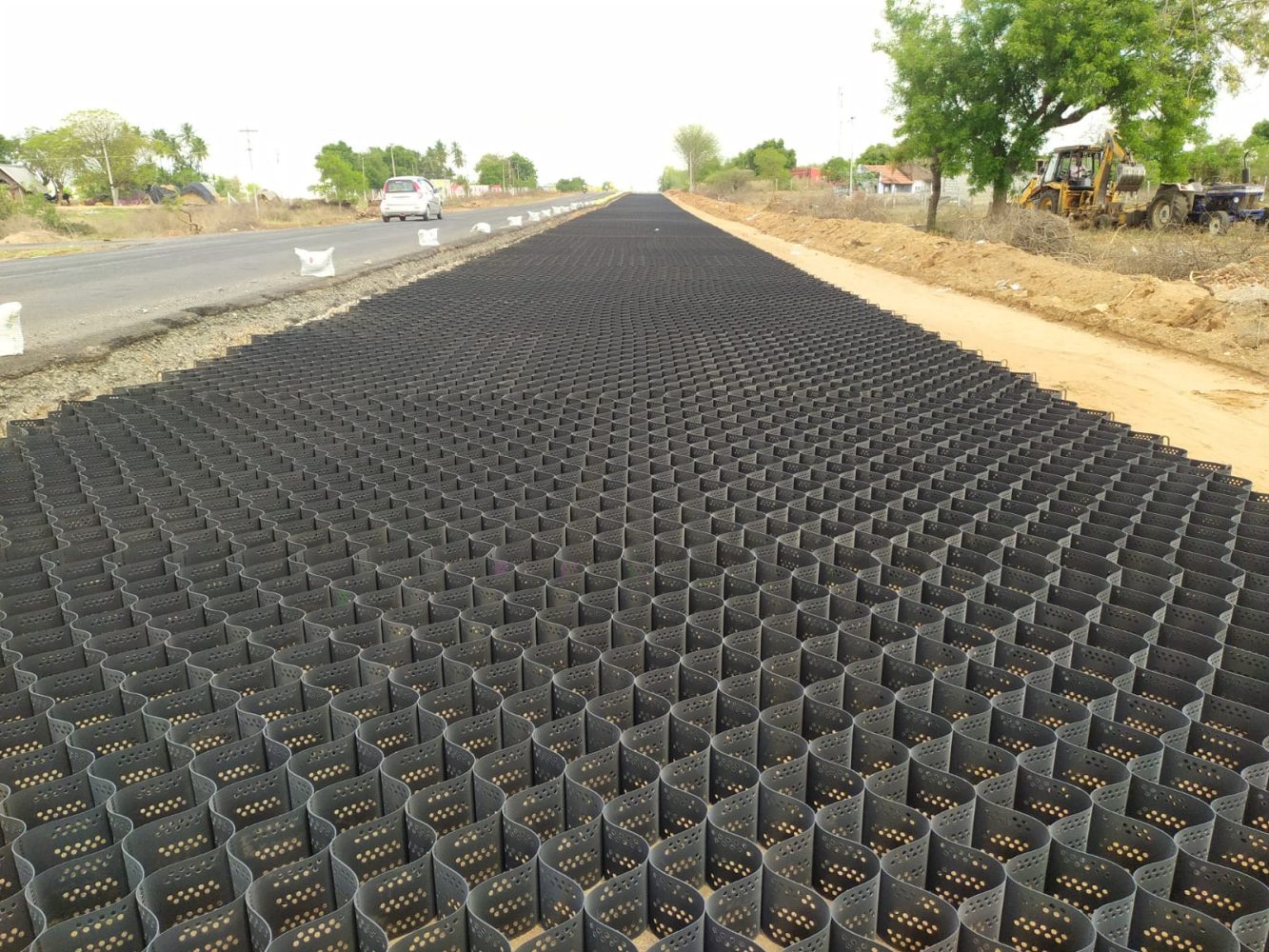
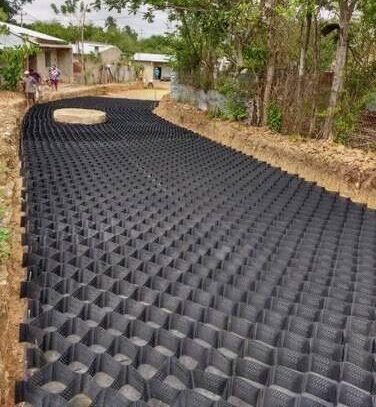
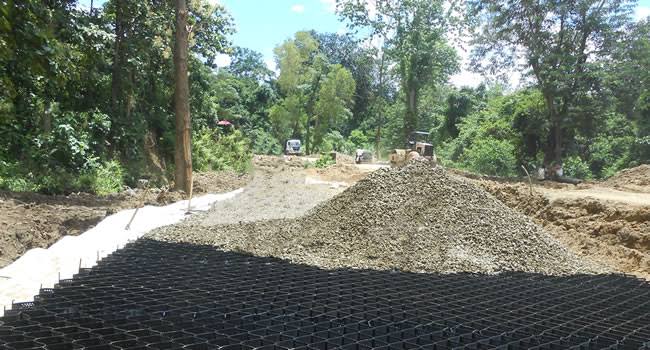
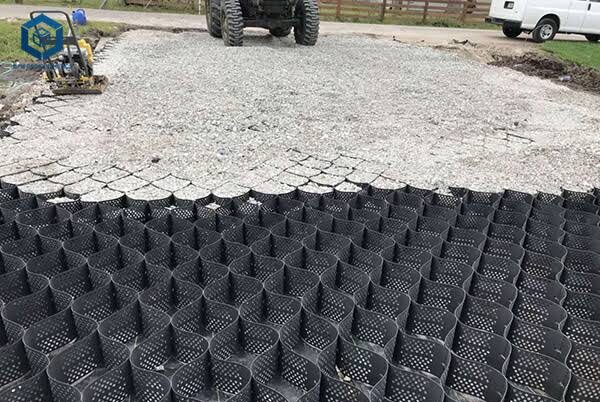
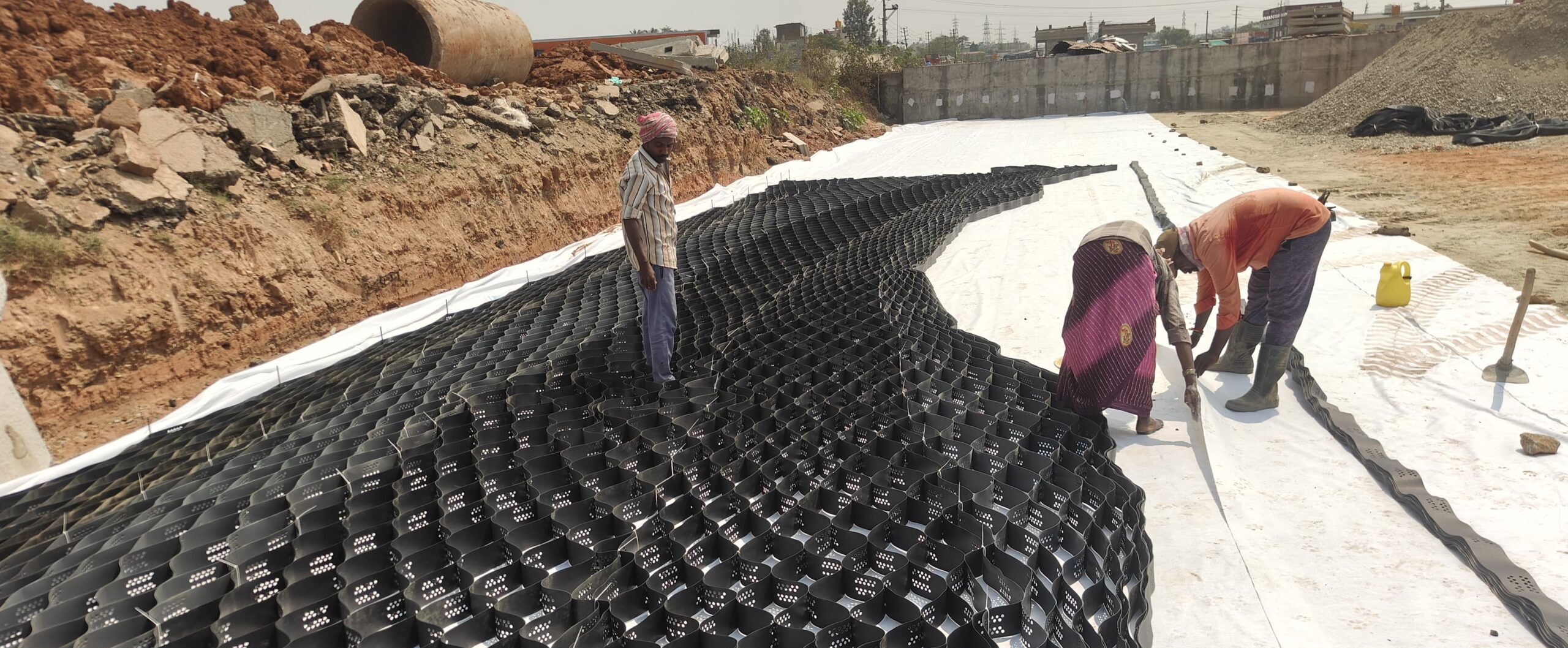
Geocells: 3D honeycomb structures that confine soil, ideal for steep slopes and heavy-load platforms.
1. What is the difference between ground improvement and soil stabilization?
Ground improvement mainly changes the physical condition of soil through compaction or drainage, while soil stabilization uses chemical additives like lime or cement to permanently enhance strength and durability.
2. Which ground improvement method is best for soft clay soils?
Techniques like preloading with vertical drains, vacuum consolidation, and stone columns are commonly used because they improve drainage, reduce settlement, and increase bearing capacity.
3. Why are chemical binders like lime or cement used in soil stabilization?
They react with soil minerals to reduce plasticity, control swelling, and create a stronger, more stable base suitable for roads, foundations, and embankments.
4. How do geosynthetics help in modern soil stabilization projects?
Geosynthetics such as geogrids, geotextiles, and geocells add tensile reinforcement, improve load distribution, and prevent soil mixing, which increases overall ground performance.
More Services
Contact With us
Flat no 102, Srinilayam, Mathrusree Nagar
Hafeezpet, Miyapur, Hyderabad, Telangana 500049
soilsolprojects@gmail.com
techgeoindustries@gmail.com